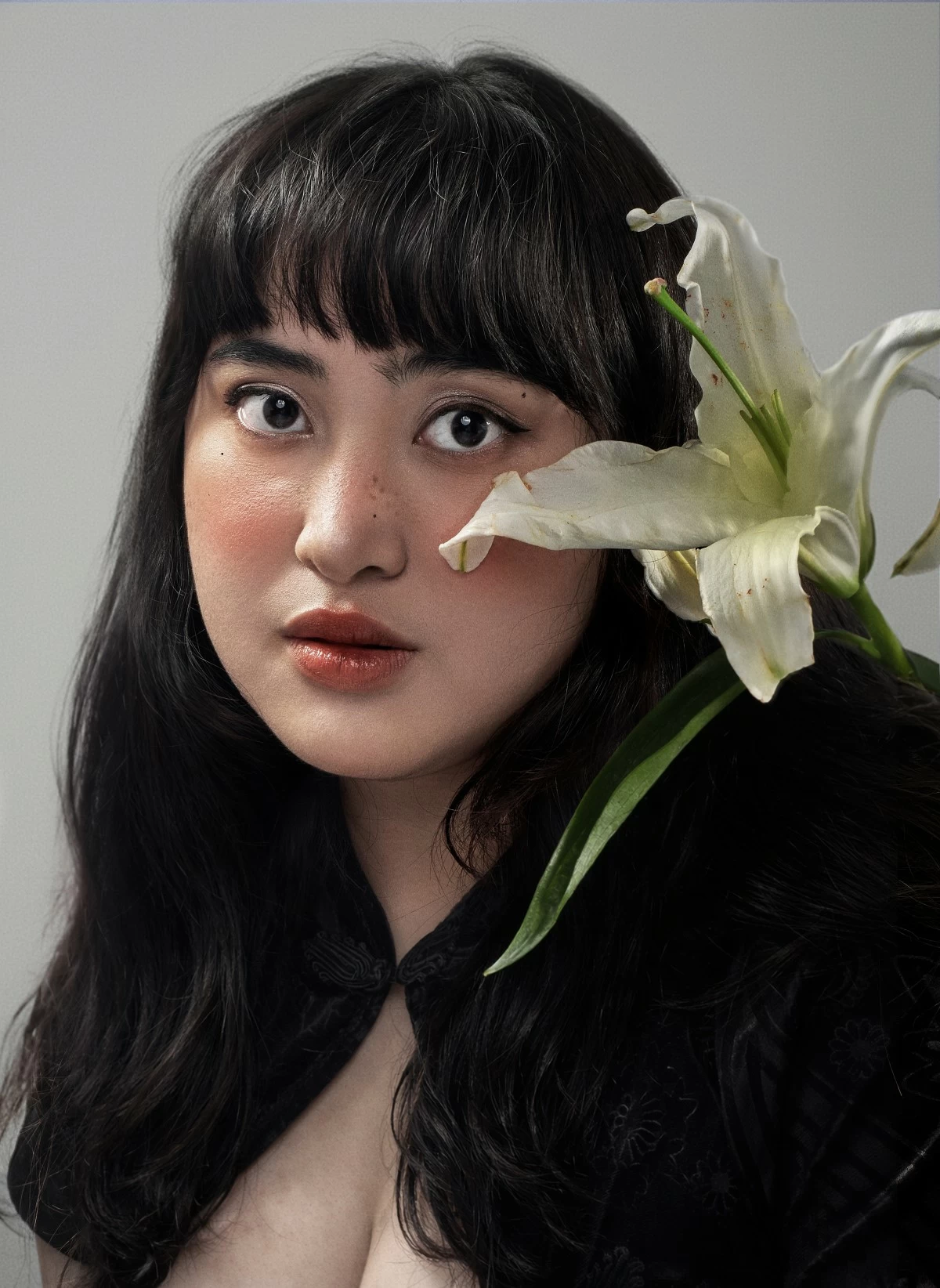
By MARVIE SERVANDE In the tattoo industry, establishing oneself as an artist takes more than technical precision. For Mia Gaspar, the artist behind Josephia Art and Tattoo, legitimacy is not measured by how closely she follows convention, but how faithfully she carves her own craft. What began with a foundation in visual arts eventually led her to a different canvas—one that allowed her to bring her illustrations to life through ink. “I was working as a graphic designer in Clark, Pampanga when the pandemic hit. I used my advance 13th-month pay to buy my first tattoo set, and it basically started everything for me,” she recounted. “With my background in fine arts and not much else to do during quarantine, I wanted to try [tattooing]. My first ever ‘clients’ were my friends and my partner!” What started as an experiment for Mia eventually led to her current profession. The 28-year-old artist has developed a practice rooted in the whimsical, departing from the conventional pursuit of photorealistic tattoos. Becoming one with the art style Long before she picked up a needle, Mia was already drawn to art that embraced the unusual and imaginative, developing a fascination with pop surrealism that would eventually become her forte as a tattoo artist. “I was never really an artist who specialized in realistic art. My influences came from Tim Burton-style drawings, and I began exploring that style through my self-portraits,” she shared in Taglish. “Over time, I delved more into the style and began incorporating it in my tattoo designs.” Pursuing her craft and exploring techniques similar to artist Mark Ryden’s dreamlike imagery and surreal, doll-like figures further shaped Mia’s artistic sensibilities, allowing her to bring the fantastical into her designs. This creative approach continues to shape how she expresses her artistic identity through her work. “It [tattooing] is an extension of my artistry,” she shared. “It allows me to bring the ideas in my mind to life…the ones that also reflect my style and identity.” Recognition beyond precision Her unique artistic identity, however, has not meant being free from other people’s judgements. Mia is no stranger to instances in which female artists are regarded as less capable than their male counterparts. “There were hints that female artists here were being excluded because the other tattoo artists had their own group, which consisted entirely of men,” she shared. She recalled a session during which she was subjected to comparison with other artists. “There was a time when I was tattooing a client, and someone accompanying them brought up another artist who participated in tattoo conventions. They pointed out that my art style was not suited for those kinds of gatherings,” she shared. “It felt like they did not consider me a real tattoo artist because my style was different from theirs.” Rather than abandoning her approach to meet expectations, Mia used the experience to fuel her drive to hone her craft even more. “I choose to not mind them and just focus on developing my art. I’d rather focus on what I think I do best than try to prove myself just to be recognized by them.” As Mia continued to refine her craft, her distinct artistic style opened doors beyond the local tattoo scene, allowing her work to reach a wider audience and her journey to speak for itself “My career got me to travel to different countries, meet new people, and do pop-up events in places I can’t believe I’d be invited to. That alone is already a success to me,” she shared. Among her proudest milestones was becoming a part of Siningtinta, an all-women art and tattoo space in Quezon City that brings female tattoo artists and creatives together. There, Mia found a community where her artistic identity was understood, celebrated, and encouraged to grow. “It felt like I was at the right place at the right time. [Siningtinta] had been advocating for women empowerment since the start, and I learned a lot about not just the technicalities of tattooing…it somehow shaped my views in the industry I am in.” Tracing beyond expectations Mia’s entry into tattooing was an unexpected turn in her career that had once seemed firmly rooted in graphic design. And yet, even in the seemingly limited space for women in her industry did not make her regret her path. “I have no regrets. Even when I was starting, during the pandemic, I was lucky enough to be supported by my friends and family,” shared Mia. In a field where recognition can sometimes be tied to convention, Mia found her solace with her fellow female artists, empowering one another in a male-dominated industry. “Up until today, the tattoo industry is more welcoming and accepting of male artists. But I have a community here where female artists are supporting each other,” she said. “We make our own space, but we do not limit it for ourselves…it is a community for everyone in the industry.” (Photos courtesy of Mia Gaspar)
Read Full ArticleThis article was originally published on mb. Click the button above to read the complete article.


